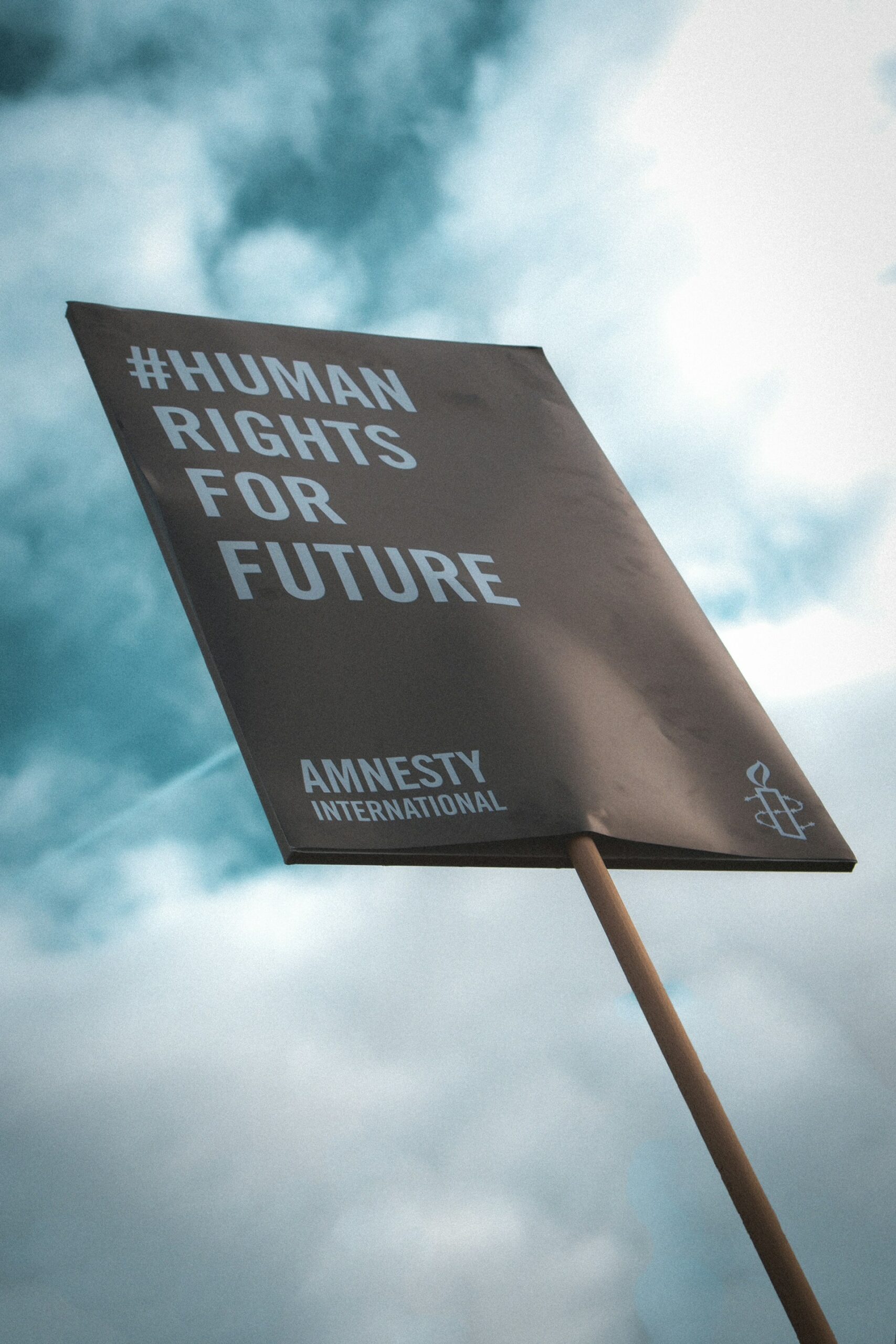
Human rights work has always been constrained by two bottlenecks: access and scale. Investigators can’t enter active conflict zones. Witness testimony disappears. Video evidence accumulates faster than anyone can review it. In spring 2026, AI is directly addressing all three problems — not as a pilot program, but as operational infrastructure embedded in the daily work of the sector’s largest organizations.
From Experiment to Infrastructure
The shift in how NGOs use AI is qualitative, not just quantitative. Three years ago, most deployments were isolated proof-of-concept tools. Today, organizations like Human Rights Watch, Amnesty International, and UNHCR run AI systems continuously as part of standard investigative and operational workflows.
Conflicts in Ukraine, Sudan, Gaza, and the Sahel have generated volumes of digital evidence that no team of human analysts can process manually. AI tools that parse thousands of hours of footage, cross-reference satellite imagery, and identify patterns in open-source data are no longer optional enhancements — they are the only way the work gets done at scale. In parallel, professionals working in high-intensity analytical environments often look for quick mental resets, and some turn to lightweight digital platforms such as https://gry-hazardowe-zadarmo.com/fast-one-casino/ during downtime, highlighting how digital ecosystems increasingly intersect with demanding workflows.
How the Major NGOs Are Using AI in Practice
The specific applications vary by organization and mandate, but three categories dominate: evidence documentation, accountability investigations, and early warning systems.
Human Rights Watch — AI-Assisted Video and Satellite Analysis
Human Rights Watch’s Digital Investigations Lab uses open-source research, geospatial analysis, and spatio-temporal data to document violations in conflict zones. In its April 2026 report on Burkina Faso — a 316-page investigation documenting over 1,800 civilian deaths — HRW used AI to process thousands of hours of footage from Burkina Faso’s state-owned news channel and a social media platform used by JNIM. The software identified key information about JNIM, military units, and the names of people involved in specific attacks.
That identification work — cross-referencing commanders and incident locations across thousands of video files — would have taken years manually. The DIL also uses satellite imagery to track village destruction, reconstruct attack sites through 3D modeling, and mine datasets for patterns in arrest rates and deportation data. These methods are now standard across HRW’s conflict investigations.
Amnesty International — Algorithmic Accountability Toolkit
Amnesty’s AI strategy in 2026 runs in two directions simultaneously: using AI as a tool for human rights work, and investigating how AI systems deployed by governments cause harm.
In December 2025, Amnesty International introduced a toolkit to help investigators, activists, and rights defenders hold governments and corporations accountable for harms caused by AI and automated decision-making systems. The resource draws on investigations across Europe, India, and the United States, focusing on public sector uses in welfare, policing, healthcare, and education.
The toolkit targets predictive policing systems and welfare-assessment algorithms that produce discriminatory outcomes against minorities, migrants, and low-income groups — often invisibly, because the decision logic is proprietary. Amnesty’s framework applies international human rights law as the accountability standard, filling the gap that ethical audits leave open.
UNHCR — Predictive Analytics and Displacement Forecasting
UNHCR uses machine learning models to forecast displacement patterns, enabling prepositioning of resources before refugee flows materialize. These models integrate satellite imagery, administrative records, conflict data, and weather inputs across multiple countries simultaneously. The result: faster response times, lower per-capita costs, and better resource distribution in regions where access is unpredictable.
The Accountability Agenda: AI as Both Tool and Target
A defining feature of NGO AI strategy in spring 2026 is its dual nature. Organizations use AI to do their work more effectively, and simultaneously treat AI systems deployed by states and corporations as a primary human rights concern requiring investigation.
Monitoring Government AI Deployments
Predictive policing, automated benefits-denial systems, and facial recognition deployed against protesters are now standard subjects of NGO investigation. Access Now tracks digital rights violations globally. Privacy International targets surveillance technologies. The Center for AI and Digital Policy monitors government AI deployments across jurisdictions. All three expanded their AI-investigation capacity substantially in 2025 and 2026.
The UN Human Rights Office Position
At the February 2026 AI Impact Summit in New Delhi, UN High Commissioner Volker Türk warned that without urgent guardrails, AI risks deepening inequality and amplifying bias. His office has called for mandatory human rights impact assessments at the design, development, and deployment phases of any AI system — governance through human rights law rather than voluntary ethics frameworks. That position is increasingly the consensus across major NGOs.
The Persistent Challenges
AI adoption in human rights work is not without friction. Evidentiary standards for courts and tribunals require verifiable provenance for AI-processed material — something organizations are still developing methodologies to guarantee. Bias in training data affects investigative tools in ways that can inadvertently skew findings toward well-documented conflicts while under-representing others.
Data security presents serious risks — the same evidence AI helps collect can expose witnesses if systems are breached. Organizations in authoritarian contexts face adversarial actors using AI to identify and target rights defenders. Smaller regional NGOs also lack the infrastructure to deploy these systems, concentrating advanced investigative capacity in a handful of large international organizations.
The Direction of Travel
AI is now embedded in human rights work at the documentation, investigation, accountability, and early warning levels simultaneously. The organizations moving fastest treat it as core operational infrastructure — and apply human rights frameworks as rigorously to the tools they deploy internally as to the government systems they investigate.
That dual accountability standard is what distinguishes the sector’s AI engagement from most others in 2026.